Quantum AI, the convergence of quantum computing and artificial intelligence, is gaining momentum as AI workloads push classical computing closer to its physical limits. McKinsey estimates that meeting AI‑driven compute demand could require nearly USD 7 trillion in global data‑center investment by 2030[1], highlighting the growing strain on classical architectures. As organisations train larger models, run high‑fidelity simulations, and optimize real‑time systems, traditional computing alone is becoming increasingly costly and constrained.
The global technology ecosystem is moving quickly. Major players such as Google, IBM, and Microsoft are investing billions of dollars and publishing long‑term roadmaps to achieve quantum advantage and, ultimately, fault‑tolerant quantum systems. At the same time, enterprise interest is accelerating: a 2025 global survey by SAS found that over 60% of business leaders are already investing in or actively exploring Quantum AI[2], even as many acknowledge that widespread deployment will take time.
The Global Shift Toward Quantum AI
Quantum AI is rapidly entering board‑level discussions across industries such as finance, logistics, energy, healthcare, manufacturing, and cybersecurity. In the near term, the most practical path forward is hybrid experimentation, where classical computing is combined with early‑stage quantum workflows. Rather than replacing existing AI systems, Quantum AI serves as a targeted enhancer—unlocking new performance in areas where scale, complexity, or simulation accuracy stretch classical approaches to their limits. Early adopters are focused on readiness, not disruption, positioning themselves to capture value as the technology matures.
Vietnam is aligning with this global shift. Through Resolution 57, the country has placed science, technology, and digital transformation at the center of long‑term development, with a clear emphasis on AI, semiconductors, quantum research, and advanced communications such as 5G/6G. This marks a strategic move from technology adoption toward technology creation, creating space for enterprises like FPT to build national deep‑tech capabilities while connecting Vietnam’s ambition to global enterprise demand.
Accelerating Deep‑tech Research and High‑impact Investments
FPT positions Quantum AI as a strategic technology unit under its newly established Strategic Technology Steering Committee, alongside Unmanned Aerial Vehicles (UAV), Railway Mobility Technology, Cyber Security, and Digital Conglomerate 5.0. The objective is clear: build Quantum AI from an emerging deep-tech frontier into a capability that strengthens core technologies, develops high-quality talent, and supports Vietnam’s long-term technological sovereignty.
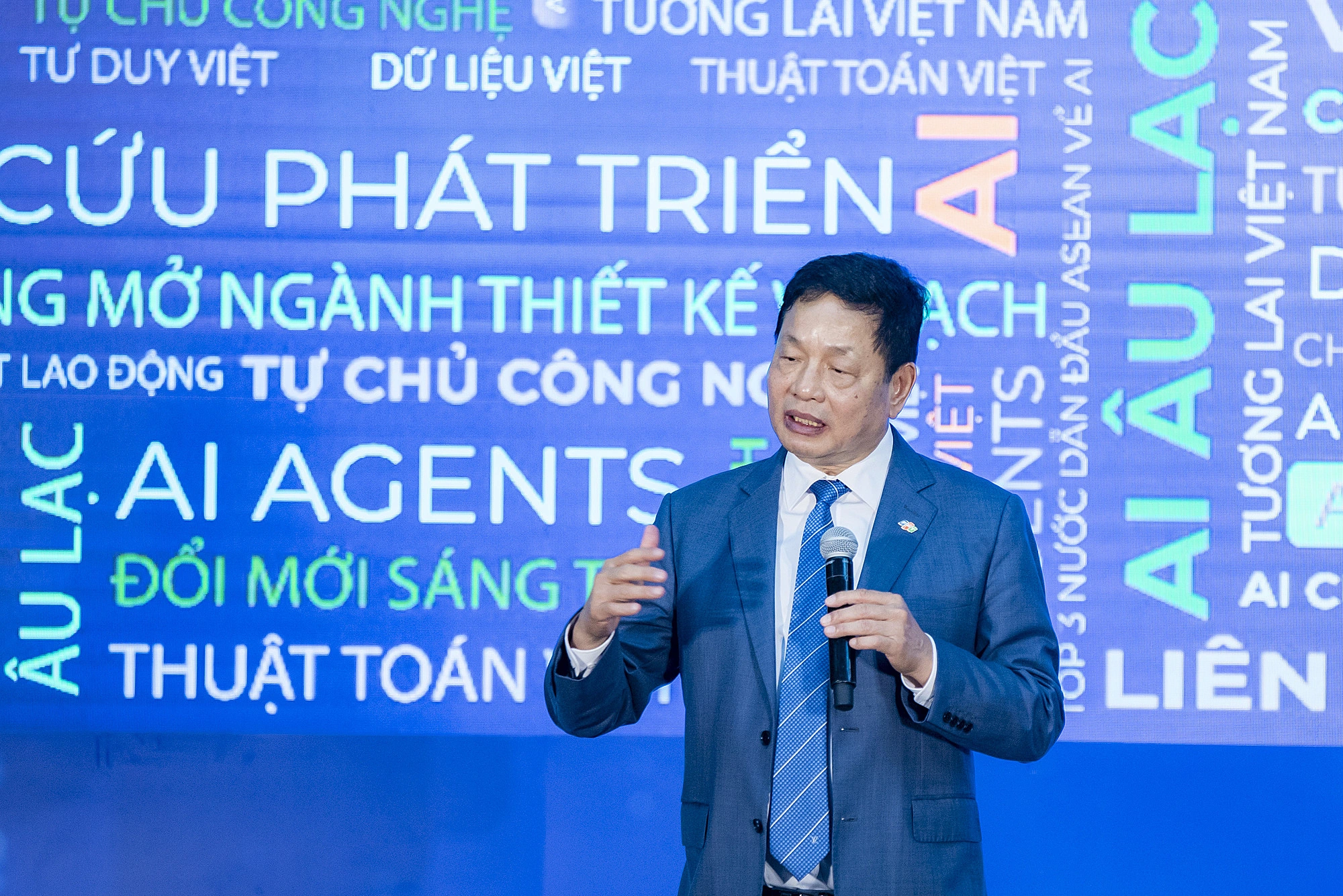
FPT Chairman Truong Gia Binh: FPT Invests in Quantum, Cybersecurity for National Technological Sovereignty
At the centre of FPT’s Quantum AI strategy is the Quantum AI and Cyber Security Research Institute (QACI), backed by a USD 100 million commitment, one of the first quantum research institutes founded by a Vietnamese enterprise. Led by Professor Ho Tu Bao as Scientific Director and Associate Professor Ngo Xuan Bach as Institute Director, QACI is designed to move Quantum AI beyond exploration and into structured, application‑oriented development.
QACI focuses on four core pillars: advanced research in quantum technology and AI, solution development, doctoral and senior‑expert training, and international collaboration. By integrating research, talent development, and real‑world application, QACI serves as FPT’s research‑to‑application engine, laying the scientific and organizational foundation for the quantum era in Vietnam and supporting global enterprise innovation.
Nurturing a Quantum‑Ready Talent Pipeline
Quantum AI demands rare, interdisciplinary expertise that blends algorithmic rigor, advanced engineering, and applied science. To build this capability at scale, FPT is investing in a long-term talent pipeline that combines global partnerships with structured education and leadership development. This pipeline is anchored in collaborations with global AI research institutions, reinforced through university programs and specialized curricula spanning AI, quantum technologies, and advanced computation. In parallel, partnerships with NVIDIA and Harvard Business Impact help scale technical upskilling while strengthening enterprise-level judgment on how AI should be adopted, governed, and applied.
The company has 25,000 AI‑augmented engineers embedding AI into real‑world delivery, while also training more than 2,000 AI and data engineering students through dedicated AI programs and expanding AI education into the general curriculum, including early exposure to AI and robotics at the primary level. This pipeline is reinforced through research exchanges, residency programs, and PhD pathways, connecting Vietnamese talent to world‑class research networks while nurturing local expertise. By developing capabilities across AI, quantum sciences, chip design, and computational engineering, FPT is building durable, future‑ready competence, laying the human foundation required to move Quantum AI from experimentation to real‑world impact.
Establishing High-performance Computing Infrastructure
Quantum‑inspired simulations, hybrid quantum‑classical experimentation, and large‑scale model development all depend on secure, scalable infrastructure that organizations can control and evolve. FPT’s AI Factories in Vietnam and Japan, powered by NVIDIA H100 and H200 GPUs, form the backbone of this strategy, providing a trusted, enterprise‑grade computer foundation built on the principles of AI sovereignty, performance, and scalability.
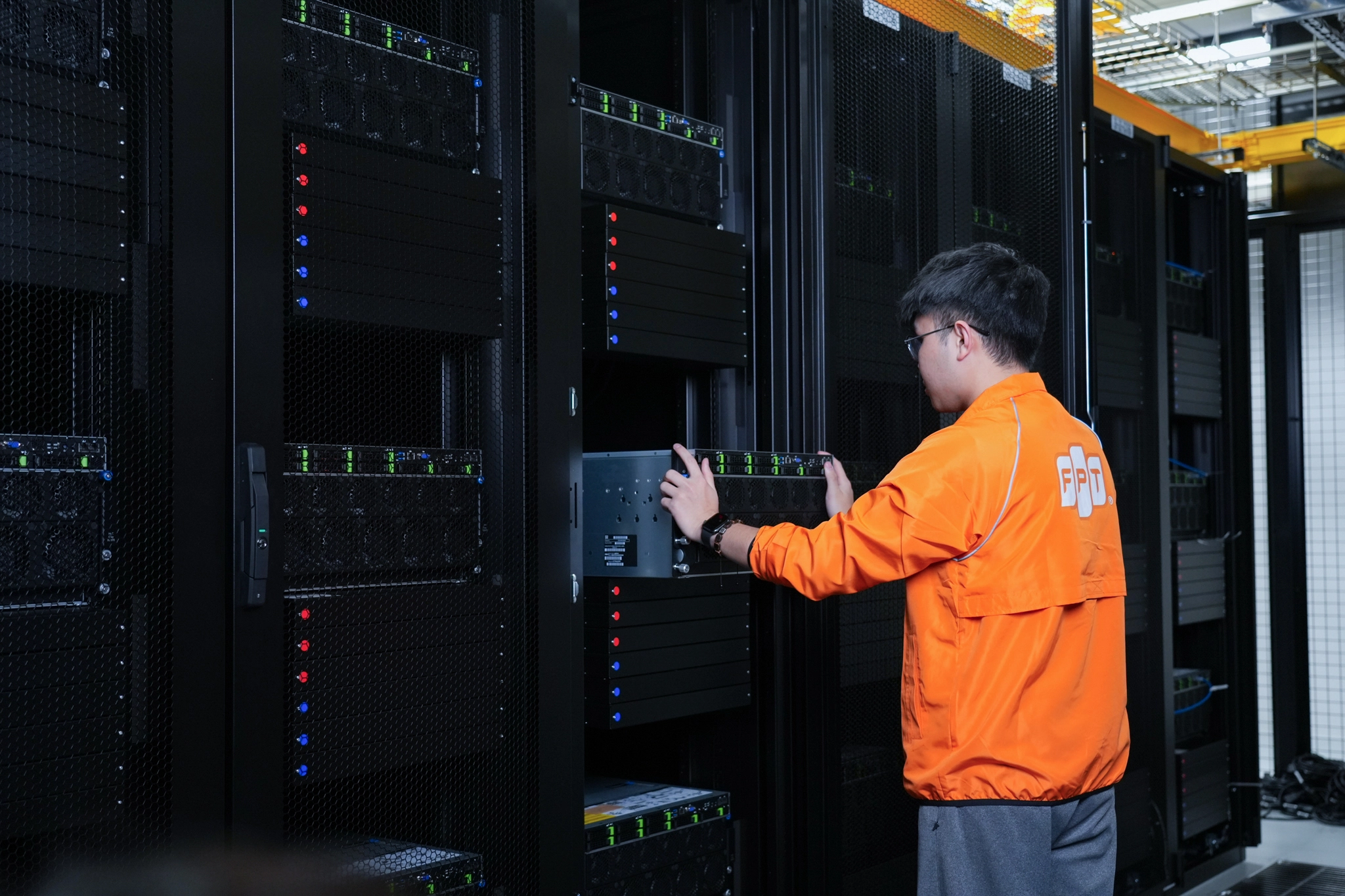
FPT AI Factories in Vietnam and Japan are ranked among the world’s top 40 fastest supercomputers
This infrastructure foundation also enables FPT to collaborate effectively across global ecosystems, connecting sovereign AI capability with partners, platforms, and research communities worldwide.
Fostering Ecosystem Collaboration and Global Partnerships
Quantum AI will not be built in isolation. FPT is deliberately embedding itself in global technology and research ecosystems to accelerate learning, validate methods, and shorten the path from research to application. This includes collaboration with NVIDIA on AI infrastructure and accelerated computing foundations, as well as long-term co-creation with Microsoft to strengthen enterprise-grade platforms, engineering capability, and responsible adoption at scale.
In deep tech and industrial AI, FPT has expanded partnerships with AITOMATIC to advance industrial language modelling and global-scale AI applications. FPT also participates in the AI Alliance, led by IBM and Meta, and maintains close collaboration with Mila, Landing AI to strengthen research and talent development. Together, these partnerships help FPT access progress earlier, reduce risk through validation, and build credible pathways toward future Quantum AI commercialization.
Building the Quantum-ready Future
FPT’s Quantum AI strategy is not a single initiative. It is a coordinated capability built across research, talent, infrastructure, and ecosystem participation. Quantum AI will take time to mature, but early leadership shapes what comes next, from standards and talent to the methods that will define the next era of computing.
Ultimately, FPT’s bet is to strengthen Vietnam’s long-term deep-tech competitiveness while laying practical foundations that can support global enterprises as Quantum AI moves toward real-world scale.